
The Final Friday? Now, where had we heard that before? Moviegoers in 1993 were a bit too savvy to fall for that again. Still, it was all part of the ballyhoo surrounding the release of another mooted last entry. A well-timed 13 years after the original Friday the 13th (1980) had thrilled audiences and appalled critics, Jason Goes to Hell would ultimately prove to be Jason Voorhees’ only foray into the 1990s. It is a divisive but highly entertaining entry that has had a welcome reassessment in recent years.
By the mid-1980s, Jason had entered the pop lexicon. His hockey mask was instantly recognizable from Los Angeles to Bangalore. It is easy to forget that Sean S. Cunningham’s original was the ‘enfant terrible’ of the burgeoning slasher movie craze at the beginning of that decade and took the brunt of a critical backlash against what many saw as youth-warping levels of explicit violence. John Carpenter’s Halloween (1978) initially inadvertently opened the crimson floodgates with a trickle. Still, it was Cunningham’s film that solidified moviegoers’ interest, ensuring that screens would be awash with fake blood for much of the decade to come.
Tom Savini’s remarkably effective destruction of tender teenage flesh with machete, axe and arrow provided watercooler moments, helping propel the movie to major financial success. This was a double-edged sword, though. The double whammy of the critical backlash against the MPAA (Motion Picture Association of America) for allowing it to pass relatively unscathed with an R rating and a political swing to conservatism in North America saw a crackdown on movie violence. In some ways, it is a small miracle the Friday the 13th series lasted as long as it did as a potent force at the North American box office. Subsequent sequels saw their sharp edges blunted by the censor’s scissors. Yet, the series remained surprisingly lucrative because of its successful cat-and-mouse boo formula, which served up good-looking teenagers on a platter to the unstoppable Jason Voorhees. Not to mention relatively cheap budgets and big, critic-proof opening weekends. Even when Paramount tried to kill Jason off for the first time with 1984’s Friday the 13th: The Final Chapter, the box office receipts ensured he wouldn’t stay dead for long.
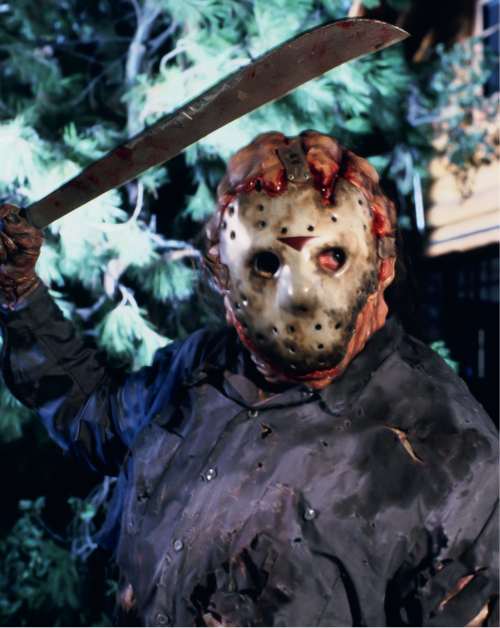
Genre critic Alan Jones once said the reason that he adored the Friday the 13th series was because of what he termed their “lethal predictability.” However, by the mid-1980s, producers felt that each new entry needed a new hook to hang that hockey mask on: ‘pseudo-Jason’ in Friday the 13th Part V: A New Beginning (1985); ‘zombie Jason’ in Friday the 13th Part VI: Jason Lives (1986); ‘Jason vs. Carrie’, as it was dubbed by some critics, in Friday the 13th Part VII: The New Blood and ‘Jason vs. The Big Apple’ in Friday the 13th Part VIII: Jason Takes Manhattan (1989).
One critical wag once quipped that only poor box office would stop the Voorhees rampage, and it was the relatively poor takings of that last entry that effectively ended the series’ nearly yearly bow. Changing tastes and audience fatigue arguably saw the franchise turn from a mainstream cinematic force to a cult one. Despite the series never making a loss for Paramount, the studio lost its appetite to continue. The box office disappointment of Jason Takes Manhattan nixed ideas of a mooted ‘Jason Takes LA’, which reportedly saw him get in the middle of 11 a turf war be
tween two gangs. Long-time series producer Frank Mancuso Jr. had finally hung up his hat, providing an opportunity for Cunningham to rejoin the franchise. Always with a keen eye on business, his original idea was for a Freddy vs. Jason mega match of the slasher icons (an irresistible idea that had been bouncing around since 1987). Like the Friday the 13th franchise, that other 80s behemoth, the Nightmare on Elm Street series, had also stuttered to a halt towards the end of the decade. Looking to the Universal Monster Battles of the 1940s for inspiration, Cunningham approached New Line Cinema – the home of Freddy Krueger. It all seemed set for the horror match-up of the decade but that was eventually shelved for the time being after Wes Craven approached the studio with the intent of making his post-modern take on Freddy-lore with New Nightmare (1994). With those plans temporarily on hold, Cunningham rightly figured that a new Friday the 13th was viable. After all, the once prolific franchise had been treading the waters of Crystal Lake for the past four years. If he couldn’t make Freddy Vs. Jason, he figured why not resurrect the specter of Voorhees for supposedly one last time? He brought in 23-year-old Adam Marcus, who had been an apprentice editor on Friday 14 the 13th Part 2 (1981), to co-write and direct what would become Jason Goes to Hell.
Figuring that audiences had tired of the kids-go-to-the-woods-and-get-killed formula that had previously been such a successful template for the franchise, Cunningham was keen to try something different. Marcus enthusiastically agreed that after eight films, people wanted to see something else. A controversial decision in hindsight that didn’t necessarily sit well with fans of the series. After some playing around with ideas, they settled on the concept that Jason was a vessel for an arcane evil that could be transferred to other humans. In other words, anyone could become a Jason Voorhees-style killing machine. The script, co-written with Dean Lorey, also featured a familial element possibly influenced by the bloodline storylines that crisscrossed the Halloween sequels, with the idea that only a descendant of Jason Voorhees could truly kill him. It was a tangential hangover from an initial script idea that would have involved Jason’s brother Elias taking on the mantle of the family evil. Given the fan backlash over ‘imposter Jason’ in Friday the 13th Part V: A New Beginning (1985), on the surface, it seemed an odd choice to make Jason Voorhees more-or-less a cameo in his own film. Perhaps akin to bazookaing James Bond at the beginning of a 007 movie. Kane Hodder, who had appeared as Jason in the past two Friday movies, agreed – outside of glimpses in a mirror, he only gets to fully appear as the character in scenes that bookend the movie. Regardless, whilst it frustrated some, it made the film a unique entry in the franchise.
Jason Goes to Hell has been compared to Jack Sholder’s earlier sci-fi body horror action movie The Hidden (1987), where insect-like aliens take over human hosts, entering through their mouths. There are also potential comparisons to be made with Fred Dekker’s Night of the Creeps (1986) and even to David Cronenberg’s earlier Shivers (1975). Although, despite a remarkably similar method of transmission, Adam Marcus has gone on the record saying that he hadn’t seen The Hidden when he was preparing the film. Coincidences do indeed happen.
Marcus, however, has been open about the influence of Sam Raimi’s Evil Dead trilogy – with an appearance of the infamous cursed book The Necronomicon. However, since New Line didn’t own the rights to the Evil Dead films, it remained something of an unofficial Easter egg for fans. Throughout the latter half of the 1980s, the slasher movie – and horror movies in general – veered from violent thriller realism towards the more fantastical. This continued into the early 1990s and influenced the direction Jason Goes to Hell would take. This change was, in large part, driven by the success of the A Nightmare on Elm Street sequels, which arguably became more darkly comedic fantasy films than outright horror. A girl turning into a giant cockroach was less likely to run into censorship problems than limbs lopped off with a machete.
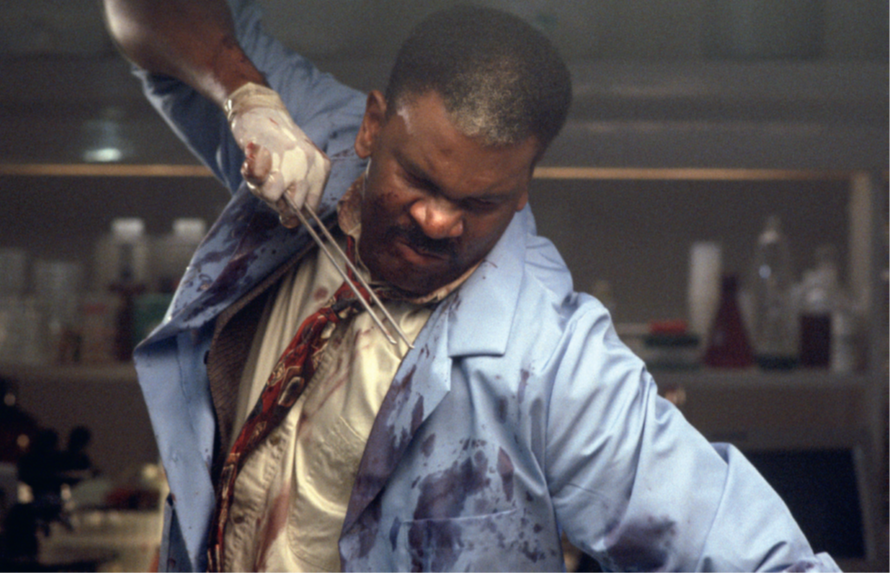
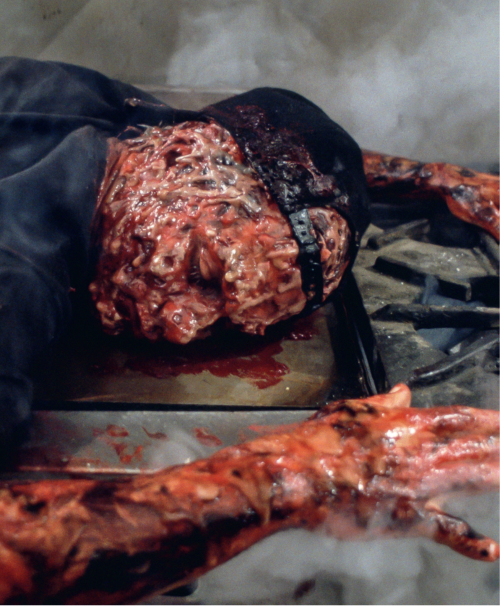
Jason Goes to Hell features scenes of body-melting horror that veered so far into the realm of fantasy that they were also less likely to be a problem for the MPAA. For the same reason, it also has violence that wouldn’t be out of place in a Looney Tunes cartoon. This was entirely intentional. An anomaly is the infamous scene of the naked camper bisected in the tent, which, ironically, turned out to arguably be the goriest kill in the entire series. The scene was added after test screenings, which predictably resulted in audiences asking where the classic stalk-and-slash scenes the series was known for were. Although the kill was all but eliminated in the R-rated cut, it was restored for its uncut video release by New Line, who didn’t share the qualms Paramount did about releasing unrated material.
Despite not receiving the recognition they deserve, several of the films in the franchise predate the post-modernism of Wes Craven and Kevin Williamson’s slasher deconstruction Scream (1996). Tom McLoughlin’s Jason Lives (1986) acts as a witty part-satire of the series while also delivering an effective slasher movie. Likewise, Marcus has fun with the franchise’s conventions, including the opening scene that somewhat parodies the spirit of earlier entries, with the lone woman in a cabin in the woods being menaced by Jason only to be revealed to be an undercover FBI agent.
Jason Goes to Hell was shot in the late summer of 1992 in and around Los Angeles. Considering that the teenage audience of the series had grown up, the casting was skewed towards older actors. Fresh off the success of Candyman (1992), Tony Todd was considered for the role of bounty hunter Creighton Duke (that eventually went to Steven Williams). Laurie Holden, who later gained recognition on the TV series The Walking Dead (2010-2022), was the first choice for the pivotal role of Jessica Kimble, but Cunningham was insistent on the casting of Kari Keegan. The quirky cast was rounded out by Erin Gray (Buck Rogers in the 25th Century [1979-1981]) and future Will & Grace (1998-2020) star Leslie Jordan, who incidentally went on to die again in William Butler’s slasher movie Madhouse (2004) (Butler had himself been a Voorhees victim in The New Blood).
The somewhat fractious relationship between first-time director Marcus and producer Cunningham has been well documented. Including the never-settled issue of whether the famous hockey mask was meant to be in the movie or not, with Marcus saying he was told to get rid of it and Cunningham denying ever saying such a thing. Due to equally well-documented clashes between the director and Kari Keegan towards the end of the shoot, Cunningham stepped in to direct some scenes and orchestrate some major reshoots. The film was finally completed and released to US screens on August 13, 1993, where it grossed $15.9 million at the box office on a budget of $3 million. Whilst turning a nice profit for New Line (not to mention being the highest-grossing horror film of 1993), it still had the dubious honour of being the second-worst performing film in the series after Jason Takes Manhattan. Albeit temporarily, it was true to its word; it was the Final Friday – for eight years at least.
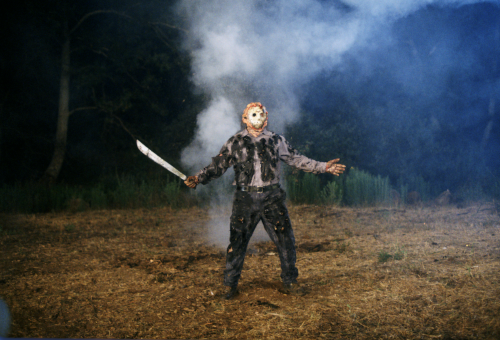
Over the years, the majority of mainstream critics have frequently expressed harsh criticism towards the series. So, it was no great surprise that Jason Goes to Hell was released without press screenings. However, like audiences at the time, critics weren’t buying that it would be the final one, either. Especially after the crowd-pleasing coda showed Freddy Krueger’s iconic razor-sharp glove pull the equally iconic hockey mask under the soil into the underworld. The tease of Freddy vs. Jason turned out to be a tad premature (although when it did finally materialize in 2003, it resulted in the highest-grossing film in the history of either franchise). Before the character of Jason could meet his match in the fight of the horror icons, he was next headed not down to hell but up into space…
Despite its still controversial status amongst die-hard fans today, Jason Goes to Hell remains a wild ride and enjoys its deserved and growing enthusiastic cult status.
JA Kerswell is the author of The Teenage Slasher Movie Book and webmaster of Hysteria Lives! and co-host of the podcast The Hysteria Continues.


